AstroParihar —
The Art of Meditation
Ancient Vedic meditation practices, personalised for your journey—cultivating clarity, steadiness, awareness, and inner stillness.
1. What Is Meditation?
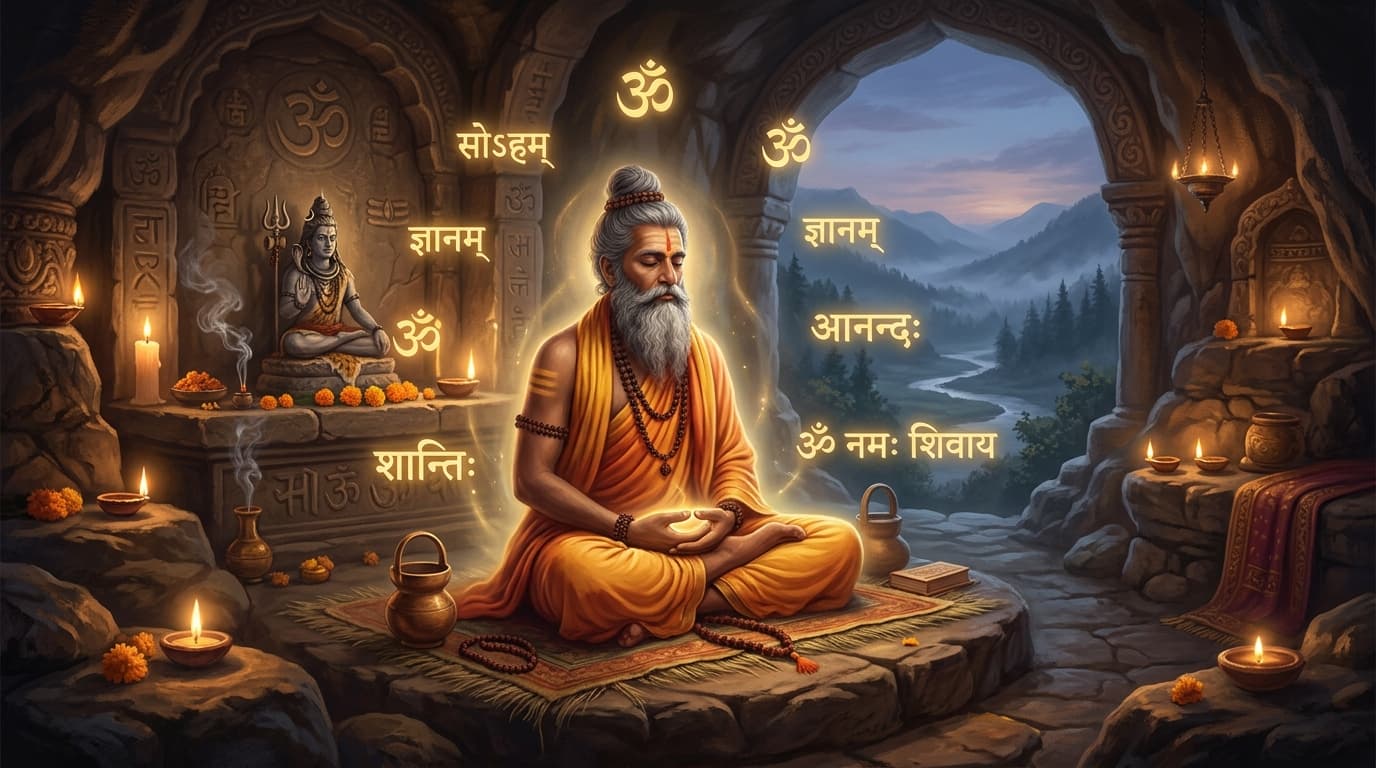
The Sanskrit word Dhyāna (ध्यान) refers to meditation or sustained contemplative awareness.
A better explanation is:
Meditation is the disciplined practice of directing and sustaining awareness upon a chosen object, mantra, deity, breath or inner principle.
In the classical progression:
Classical sources distinguish dhāraṇā from dhyāna by continuity of attention: concentration fixes awareness, while meditation sustains it.
2. Why Meditation Matters in Vedic Practice
Meditation is not merely a temporary remedy—its deeper Vedic purpose is to cultivate internal mastery:
Purification and steadiness of the mind.
One-pointed sustained attention.
Unshakeable inner tranquility.
Spiritual discernment and wisdom.
Devotional surrender and attunement to Divine consciousness.
The Bhagavad Gītā describes disciplined regulation of the mind and body as an indispensable part of dhyāna-yoga.
3. AstroParihar's Core Meditation Method
The foundational 15-minute daily Vedic protocol for steadiness, clarity, and peace.
Step 1 — Prepare
1–2 MinsChoose a clean, quiet place and sit comfortably with spine upright.
Recommended Postures:
- • Padmāsana (Lotus) or Siddhāsana
- • Sukhasana (Easy cross-legged)
- • Or comfortably on a chair with upright spine.
Comfortable posture is priority over difficult contortions.
Step 2 — Sankalpa
MantraClose your eyes, take 3 deep breaths, and mentally recite the sacred resolve:
"For the peace of my mind and self-awareness, I undertake this meditation."
Step 3 — Breath Awareness
2–3 MinsDo not force or manipulate the breath. Simply witness the natural respiratory cycle:
The objective is passive awareness, not forceful breath retention.
Step 4 — Mantra Japa
5–7 MinsRepeat your chosen sacred mantra mentally with deep reverence (27, 54, or 108 times):
Step 5 — Dhāraṇā (Focus)
ConcentrationRest attention on one focal point (breath at nostrils, third eye, diya flame, or deity image).
When Mind Wanders:
You are training awareness not to get hijacked by every incoming thought.
Step 6 & 7 — Dhyāna & Closing
Stillness & PeaceRest in sustained silent awareness for 3–5 minutes. To conclude, join palms and chant:
Remain seated for 30 seconds before slowly opening your eyes.
4. Handling Wandering Thoughts
Practical Example:
Thought arises: "I need to call someone."
Do not follow the storyline. Label it gently: Thinking.
Return to your breath or mantra smoothly.
This constant gentle returning is the true muscle of meditation.
Astrological Alignment for Dhyāna
- ✓Brahma Muhurat (4:00 – 6:00 AM)
Peak Sattvic energy ideal for deep Dhyana and mantra absorption.
- ✓Moon & Mercury Pacification
Calms an agitated Moon (emotions) and restless Mercury (overthinking).
- ✓Ishta Devata Connection
Chanting your 5th/9th house Ishta mantra accelerates spiritual breakthroughs.
Seek Personalized Vedic Mantra & Sadhana Guidance
Discover your personal Ishta Devata, customized Bija Mantras, and planetary Dhyana protocols by consulting with our revered Vedic astrologers.